
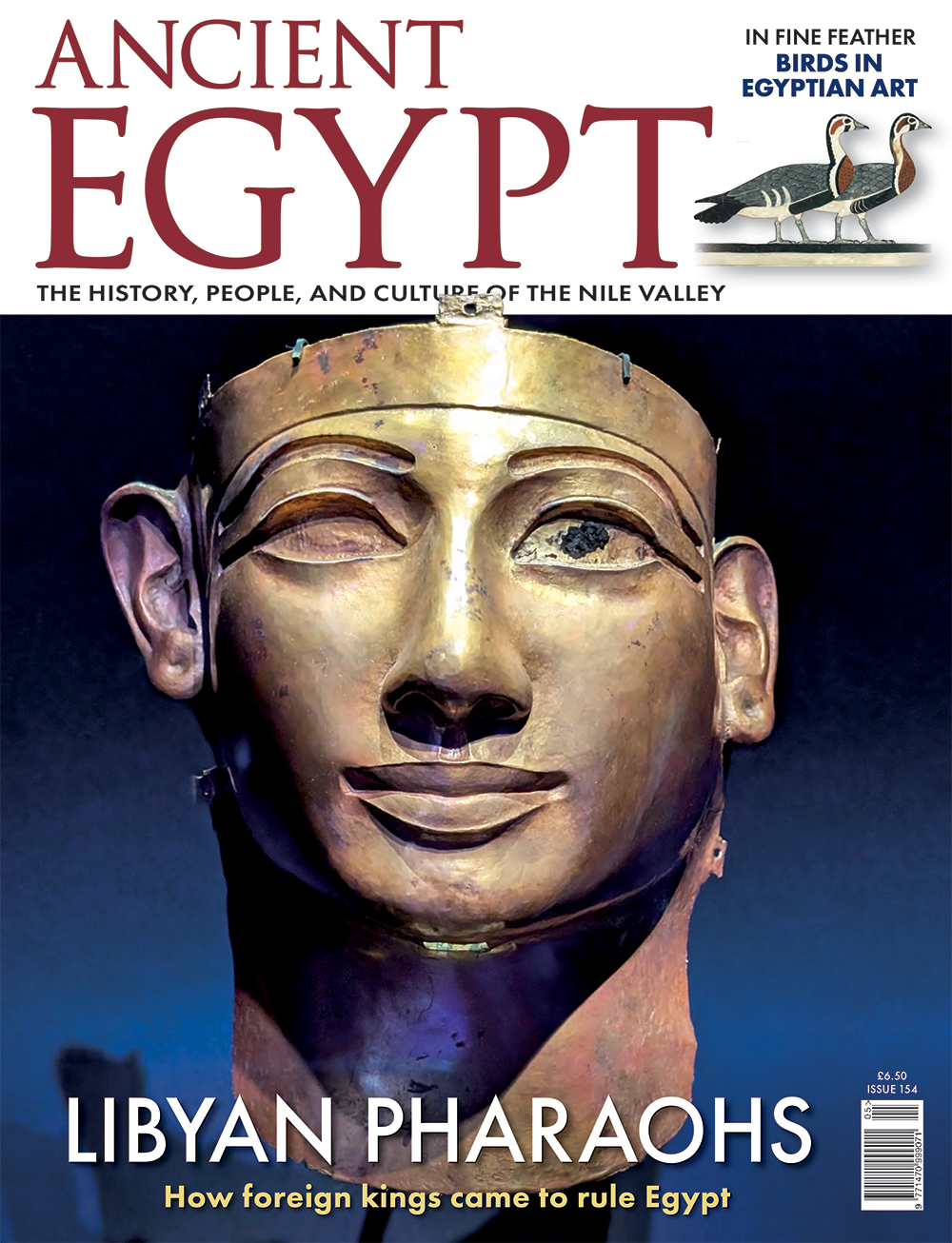
AIthough they left very significant monuments (like the A first courtyard of Karnak Temple, which dates to the reign of Shoshenq I) and treasures to rival those of Tutankhamun (such as the gold mask of Shoshenq Ila from his burial at Tanis), many details of the complex story of the Libyan pharaohs of Egypt are still to be discovered. Fortunately, Aidan Dodson has ‘grasped the nettle’ and traced the confusing family tree of these ‘foreign’ pharaohs for us in his article in this issue. Readers may notice that Aidan uses transcriptions for the names of the individuals concerned which differ from those in earlier publications – our knowledge of the period increases with new research.
One early Egyptologist whose discoveries transformed our view of the ancient civilisation was the founder of the first Egyptian Museum at Bulaq: Auguste Mariette. He was also responsible for clearing the sand and overlying mud-brick structures from most of the famous temple sites that are so familiar today, using huge teams of workers, and destroying much of the evidence that modern excavators would have carefully recorded. The story of his life, starting from a middle-class provincial background in France, is told by Amandine Marshall.
One area not cleared by Mariette, however, was the site of Amarna. Karl Harris takes us on a tour of Akhenaten’s capital city in the first part of a double article.
The coloured decoration of most Old Kingdom tombs has not survived, but one exception, the Tomb of Insneferuishetef, is described by Wolfram Grajetzki. Hilary Wilson identifies some of the many species of bird depicted on tomb reliefs of all periods throughout Egypt.
Daniela Rosenow introduces a new website – the Tutankhamun Spatial Archive. This brings together in one place all the records of the excavation of Tutankhamun’s tomb held by the Griffith Institute at the University of Oxford.
Two articles describe extraordinary modern craftmanship: Geoffrey Killen tells us how W A Stewart reconstructed the furniture of Old Kingdom Queen Hetepheres I; and the painstaking work of the ‘Tentmakers of Cairo’ in producing intricate fabrics is investigated by Sandra Hardy.