
Sometimes an artefact can create a powerful flash of recognition, linking your own experiences with those of someone who lived centuries earlier. I felt this kind of connection when visiting a new exhibition for this month’s ‘In Focus’. The displays, which tell the story of a woman who was buried in late Roman Colchester, include a hairpin whose shaft is covered with dents interpreted as possible teethmarks, evoking its owner holding the object in her mouth while fixing her hair. Almost 2,000 years later, I do the same thing every morning – though my hairgrips are cheap plastic rather than finely crafted Whitby jet!
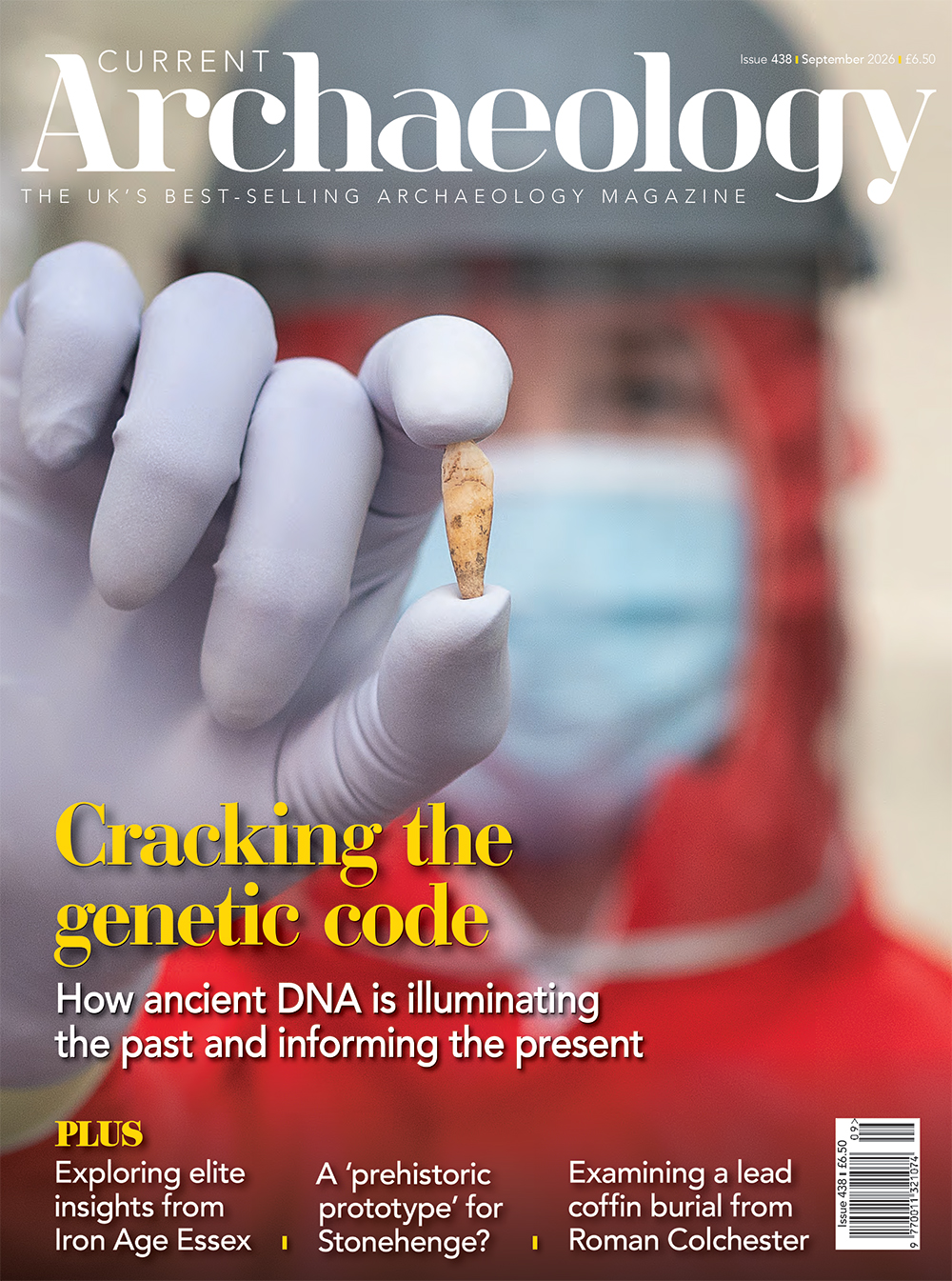
Thanks to the continuing advance of archaeological science, we can also glean amazingly precise and personal information about people from the past by analysing their DNA. Pioneering work by the Francis Crick Institute in London is bringing a wealth of illuminating stories to light once more, as our cover feature reports.
Our next article takes us to Iron Age Essex to examine two recent discoveries – the largest hoard of Iron Age gold coins yet found in Britain, and a series of elite burials – that shed intriguing light on how local people may have responded to early contact with the Roman world and the upheaval of invasion.
We then travel to Salisbury Plain to bring you a fuller account of an exciting discovery that we touched on briefly in last month’s CA: evidence that Late Neolithic communities may have gathered to hold solstice celebrations near Stonehenge 500 years before its famous sarsens were erected.
Complementing this discussion of ceremonial gatherings during the Neolithic period, we are also exploring another kind of place that has brought people together over the centuries: parish churches, specifically those of medieval Norwich.