
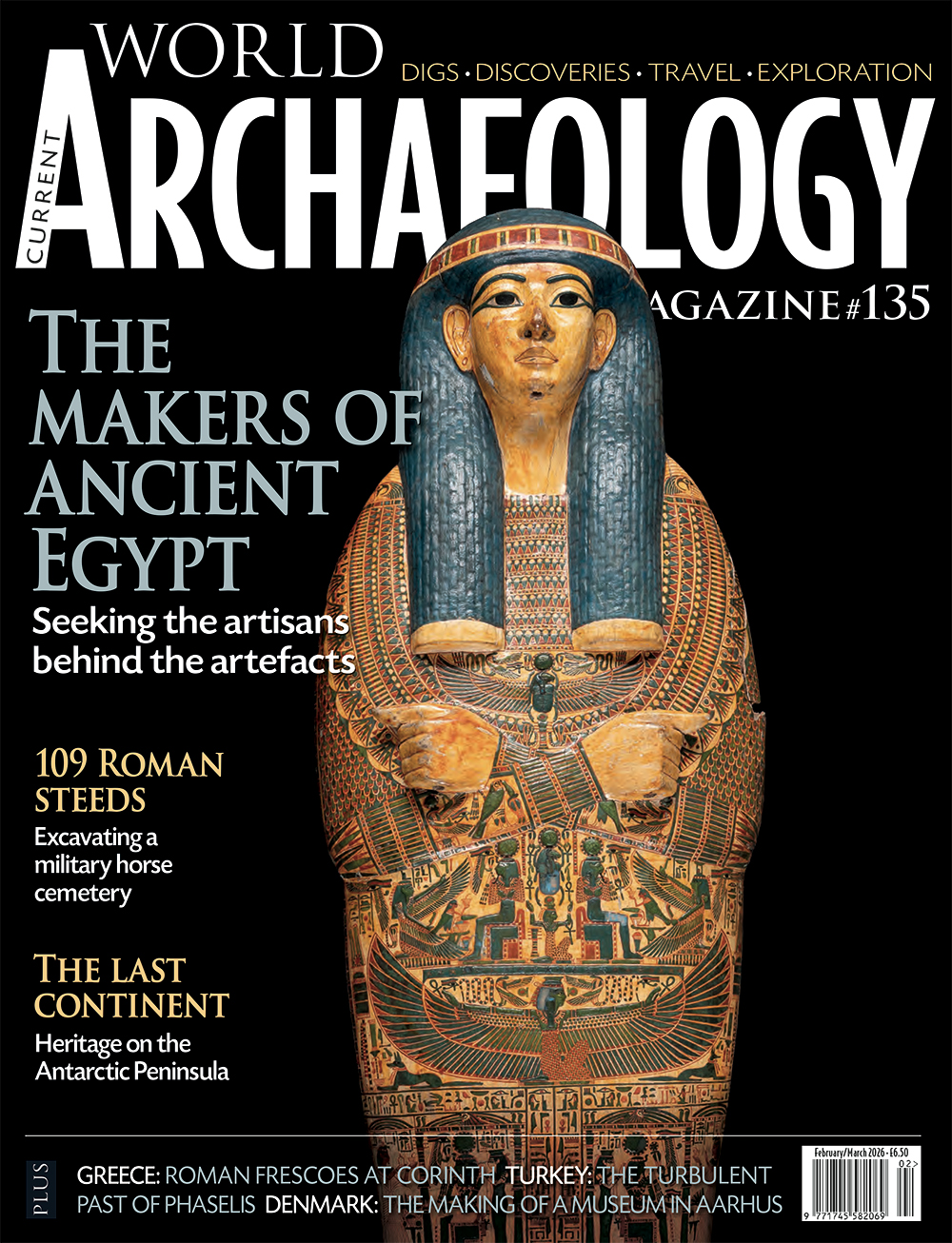
Art and artefacts from ancient Egypt must rank among the most remarkable and influential from the ancient world. Yet we know comparatively little about the artisans who created these iconic works. Traces of the individuals behind these objects can still be found, though, ranging from texts asserting their contributions to errors in the production process that may or may not have been cunningly -disguised. As an exhibition at the Fitzwilliam Museum in Cambridge celebrates such human touches, we go in search of the makers of ancient Egypt.
In Bad Cannstatt, Germany, it is equids that have been the focus of attention. Excavations revealed the remains of a horse cemetery associated with a Roman frontier fort. In total, the remains of 109 animals have been recovered, offering fresh insights into how they were treated in both life and death.
Achieving a permanent human presence in Antarctica led to numerous scientific bases being established. In the 1990s, it was agreed that all defunct facilities on the continent should be classed as either waste and removed or heritage and protected. We take a look at what the preserved bases on the Antarctic Peninsula can reveal about British science in the region.
At Aarhus, Denmark, the objects in the care of a university museum include a fine set of casts from celebrated sculptures. One of the reasons they were preserved, when many such collections elsewhere were junked, was because of their relevance to contemporary research interests. We examine how such agendas continue to be reflected in museum activities.
In our travel section, Richard Hodges resumes his interview with Charles Williams about the remarkable discoveries at Corinth. Elsewhere, a trip to Phaselis, in Turkey, is an opportunity to weigh the risks and rewards of its sublime coastal setting.
Finally, I would like to mention Søren Sindbæk, who is signing off in this issue. Søren has been a popular fixture alongside Rubina Raja in their regular column, and I want to thank him for all of his wonderful contributions to CWA.